


Welcome to a new issue of the Unlocking Real Estate Value newsletter. Each week I will provide you with exclusive advice and professional insights to help you realise long-term value through real estate development.
The City of London was empty by 7pm. That was the problem long before COVID made it impossible to ignore.
Central Business Districts were built around a single premise: everyone commutes to the centre, every day. That premise has been failing for years. The pandemic accelerated what was already in motion.
This issue covers five trends reshaping CBDs right now and what they mean for real estate investors and developers looking to position ahead of the curve.
In this newsletter we will cover the following:
CBDs Were Already Becoming Ghost Towns Before COVID Hit.
Mixed-Use Is Replacing the Mono-Functional Office District.
Companies Are Taking Less Space, but Spending More Per Sq Ft.
The Workplace Is Moving to the Neighbourhood, Not the Centre.
Obsolete Buildings Are a Liability, or the Biggest Opportunity in the Market.
Let’s dive in.
Trend 1: CBDs Were Already Becoming Ghost Towns Before COVID Hit
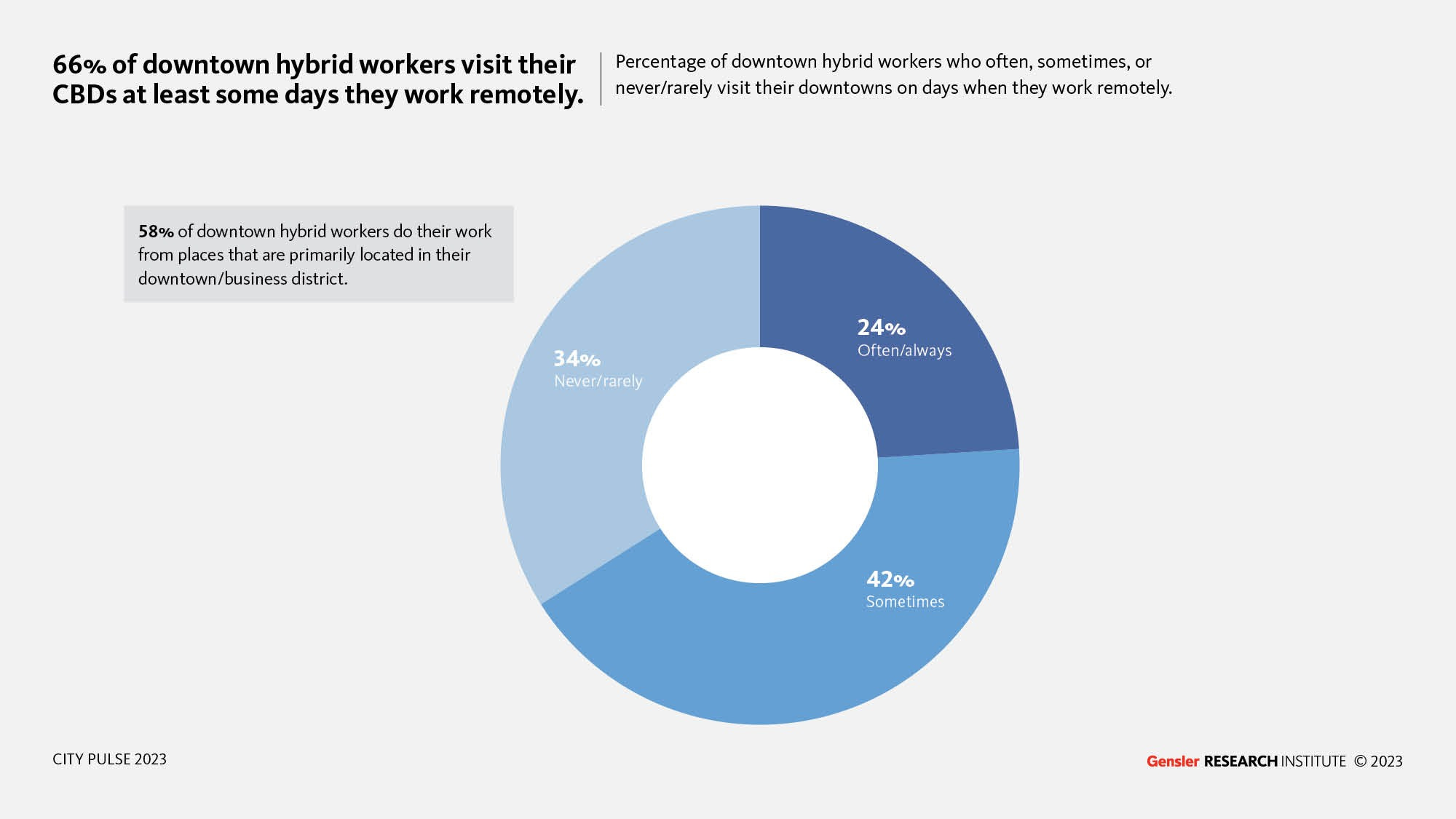
The monoculture of the office district was always fragile. Pack a neighbourhood with workers, clear it out at 6pm, and what you have left is dead urban space. That is not a pandemic problem. It is a planning problem.
European cities managed this better than most. Mixed-use neighbourhoods built over centuries gave them natural resilience. Modern US CBDs, designed around the car and the 9-to-5, had less buffer.
I stopped commuting to a fixed office in 2019. I carried my office in a backpack and worked from consultant offices, hotel lobbies, and coworking spaces across the city. The infrastructure was already there. The demand was already there.
[BLANK: Carlo — what did you observe in a specific CBD at that time that made the monoculture problem obvious to you? A building, a street, a vacancy rate? One concrete detail here would land well.]
London is a collection of villages each with its own “village centre”. So if you live in Queens Park you can access all the main shops in the same community. In a city like Milan, if you live in certain peripheral districts you will need to travel to the centre to access services, because those neghbourhoods were built as just residential and haven’t moved on.
The City of London Corporation saw this coming. Their Planning Department pushed a deliberate shift toward shops, restaurants, and cultural uses alongside offices. By 2023, the Square Mile had become a genuine destination rather than a daily commute endpoint.
Trend 2: Mixed-Use Is Replacing the Mono-Functional Office District
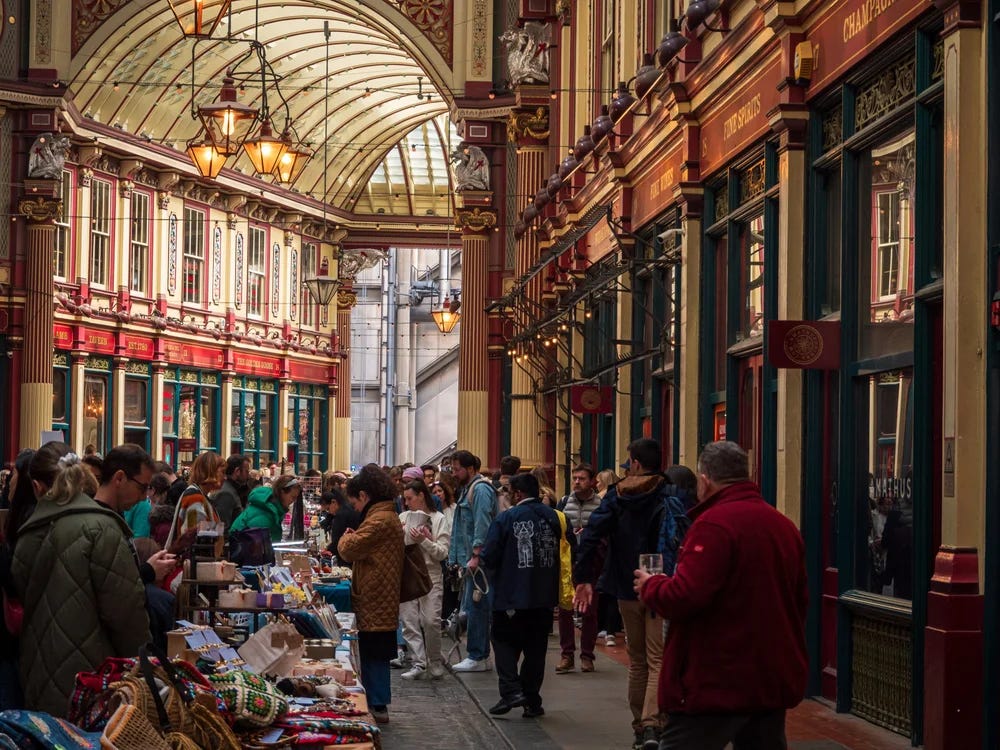
The most resilient CBDs are becoming more like neighbourhoods. That means reducing the dominance of office towers and building in retail, residential, hospitality, and cultural amenities alongside them.
Mixed-use development solves three structural problems at once. It creates street-level activity beyond office hours. It reduces car dependency by putting housing and jobs in proximity. And it gives the district a buffer against sector-specific shocks — if office demand falls, residential demand can hold the value of the area.
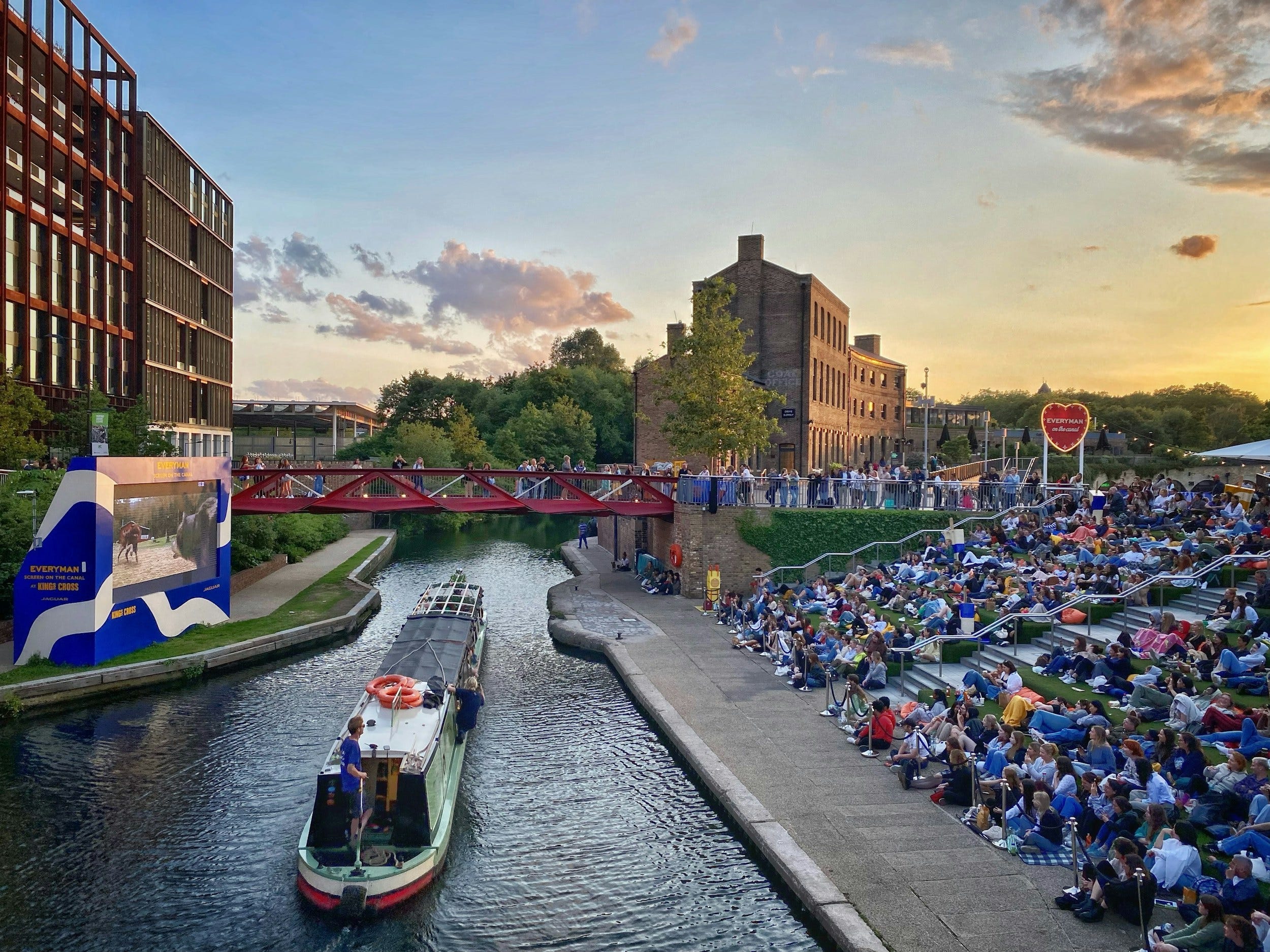
King’s Cross in London is the most instructive example. What was a derelict railway goods yard is now a mixed-use district anchored by Google’s European headquarters, alongside apartments, restaurants, a university campus, and public space. The development succeeded because it was designed around people, not just tenants.
Milan in Italy is changing rapidly and if you take into account the wider metropolitan area it’s actually a collection of towns, like Monza, Rho, Baggio and more. Each one with its own history and core centre.
Paris is running the most ambitious version of this experiment. The 15-minute city model — where every resident can reach work, services, and amenity on foot or by bike — is reshaping how the city allocates space in its inner arrondissements.
Trend 3: Companies Are Taking Less Space, but Spending More Per Sq Ft
Office footprints have been contracting for a decade. Hybrid working accelerated the trend. But this is not the death of the office. It is a flight to quality.
The logic is straightforward. Companies need their offices to justify the commute. That means better design, better amenity, better technology. A smaller space that people actually want to use beats a large floor plate that sits half-empty.
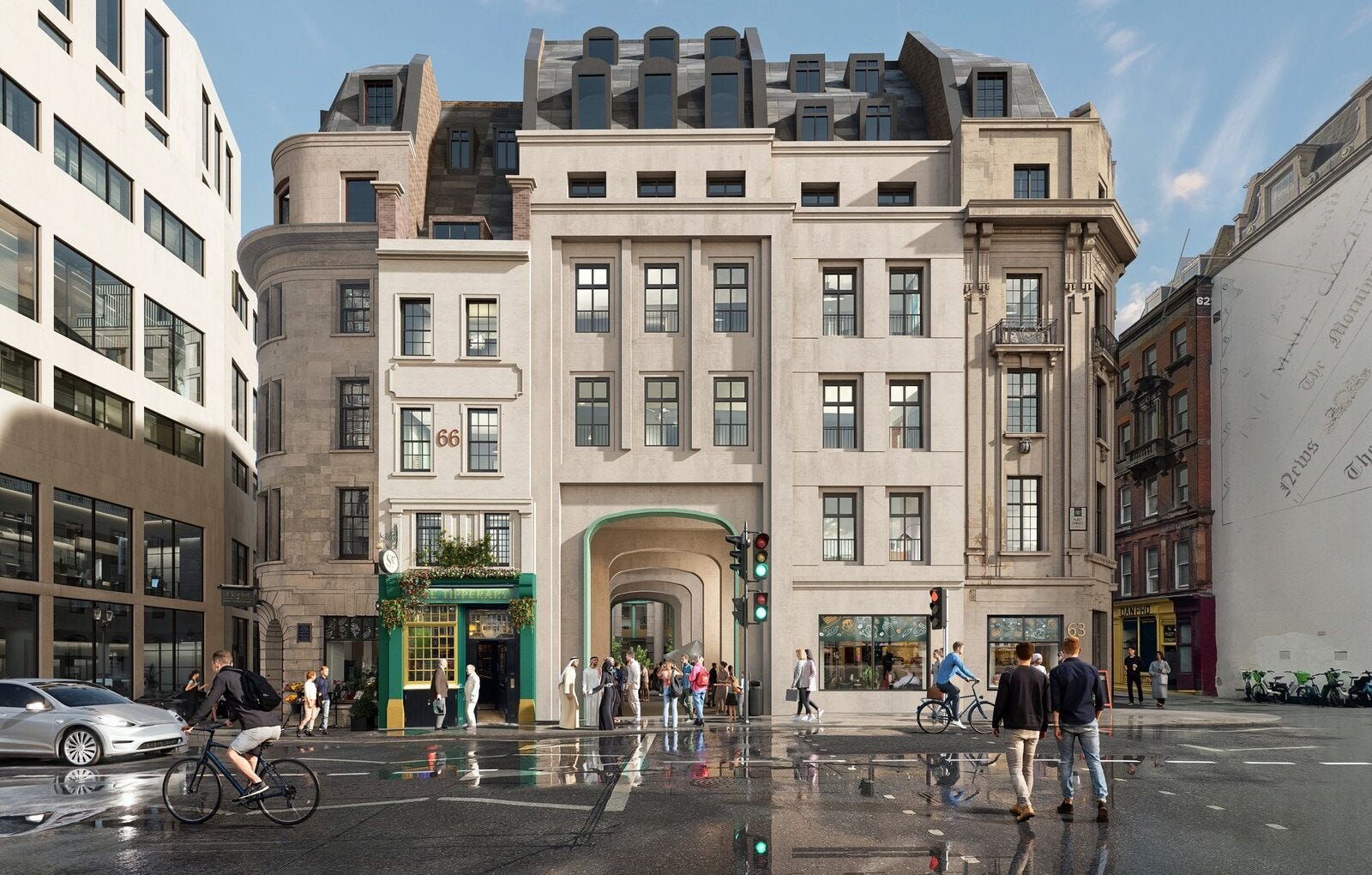
Freshfields Bruckhaus Deringer made this move before the pandemic. In 2016, they signed a lease at 100 Bishopsgate in London and consolidated roughly 370,000 sq ft across two Fleet Street buildings into a single 300,000 sq ft location. The new building saved them 30% in energy costs.
65 Fleet Street, the former Freshfields Hq, is now being transformed into a Student Living led mixed-use development.
The efficiency gain is also structural. Modern offices are designed for higher densities. Flexible working reduces the number of dedicated desks needed. The result: the same headcount in less space, at lower operating cost, in a building workers prefer.
Trend 4: The Workplace Is Moving to the Neighbourhood, Not the Centre
One consequence of hybrid working is demand for workspace closer to home. Coworking operators expanded aggressively into suburban and residential areas in response.
This is not a threat to CBDs so much as a redistribution of where work happens during the week. Many workers now split their time between home, a local coworking space, and the central office. The CBD becomes one node in a network, not the default destination.
SMEs and solo operators are driving part of this demand. In the EU, SMEs account for around 90% of all businesses and have been growing at roughly 3-4% annually (European Commission, 2023). Most do not need a CBD address. They need a functional desk near where their people live.
For local economies, this is an opportunity. Neighbourhood amenities (cafes, dry cleaners, gyms, restaurants) benefit from daytime footfall that used to stay in the centre.
Trend 5: Obsolete Buildings Are a Liability, or the Biggest Opportunity in the Market
Rising vacancy in secondary office buildings is a structural problem and a value-creation opportunity at the same time.
The problem is clear. Older, inefficient office stock that cannot compete on quality is emptying out. CBD vacancy trends in major cities like London and Milan is compressing, with Milan at less than 3% vacant space in CBD and central areas (Cushman and Wakefield Q3 2025). Values on secondary and tertiary office assets are falling, and some will not recover.
The opportunity is in repositioning. Converting obsolete office buildings to residential, hospitality, or mixed-use generates the value that sitting on vacant space destroys. The technical challenges are real (floorplate depth, natural light, building services) but they are solvable.
Brown-to-green conversions are another route. Upgrading an existing building to meet current ESG standards retains embodied carbon, reduces cost versus demolition and rebuild, and qualifies for a generation of tenants and investors with sustainability mandates.
The gap between prime and secondary office values is widening. That spread is where investors with the skill to reposition assets will make returns in the next cycle.
Conclusion
CBDs are not dying. They are being forced to become something more useful.
The office districts that survive will be the ones that stop relying on a single use type, attract people for more than eight hours a day, and give developers and investors a range of value-creation routes rather than just one.
Key takeaways:
CBDs were already under pressure before the pandemic. COVID removed the slack.
Office footprints are shrinking, but the remaining space is higher quality and higher cost per sq ft.
Mixed-use is the structural response.
The workplace is decentralising. CBDs become one node, not the only node.
Vacant secondary office stock is the most significant repositioning opportunity in the current market.
That’s all for today.
See you next week.
— Carlo
Founder and Managing Director Benigni
One question before you go:
Has your organisation reduced its office footprint since 2020, and did the space you moved into perform better?
Hit reply and tell me. I read every response.