


Welcome to a new issue of the Unlocking Real Estate Value newsletter. Each week I will provide you with exclusive advice and professional insights to help you realise long-term value through real estate development.
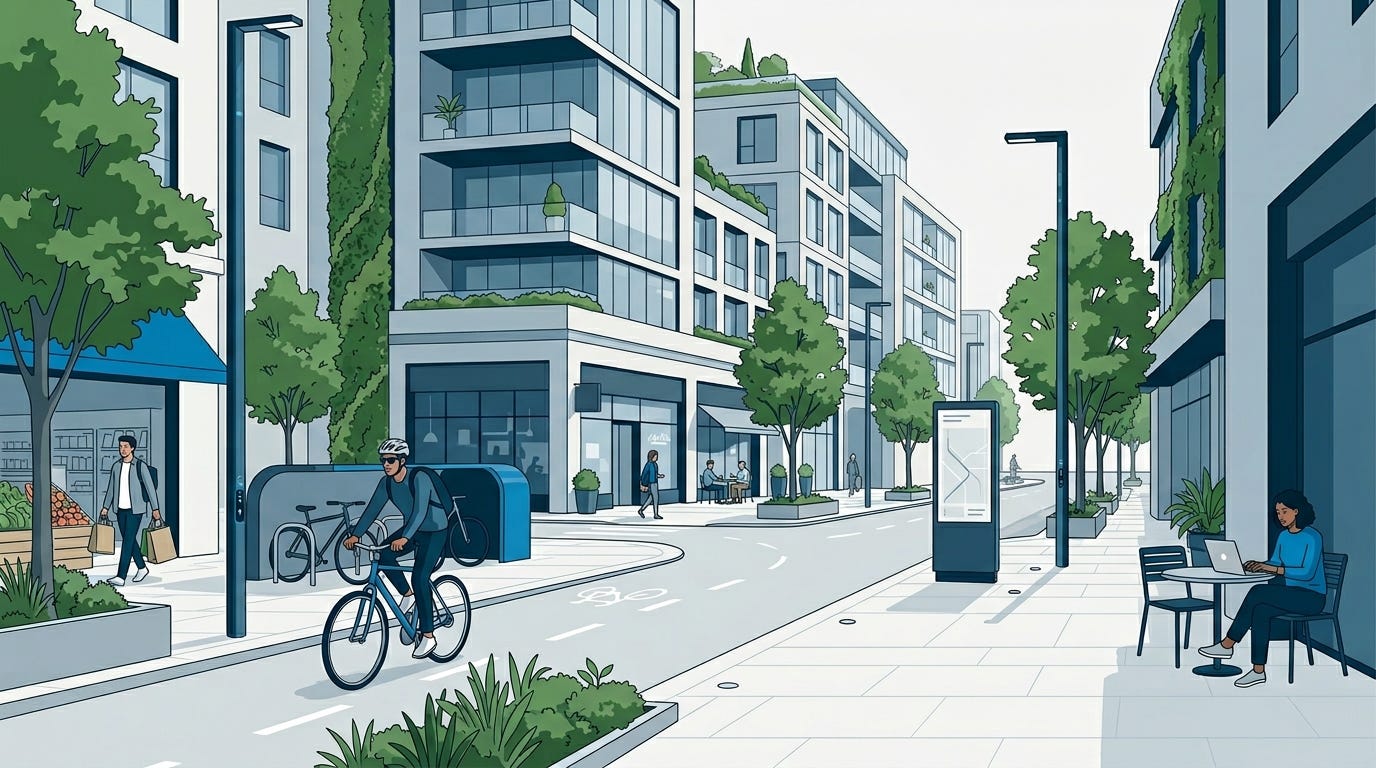
Most cities were designed around cars. The best ones are being redesigned around people — and the assets inside them are becoming more valuable as a result.
The 15-minute city is a simple idea: every daily need — groceries, school, work, green space — within a 600m to 1km walk or bike ride. Paris is doing it. Milan is doing it. Stockholm is doing it. And developers who build for this model are finding stronger demand and better rents.
Here are four strategies to build for it.
Strategy 1: Ground-floor activation is the cheapest way to build community loyalty
A building’s ground floor either generates community or kills it. Most developers treat it as an afterthought — a car park entry, a service corridor, a letterbox wall. That’s a missed opportunity.
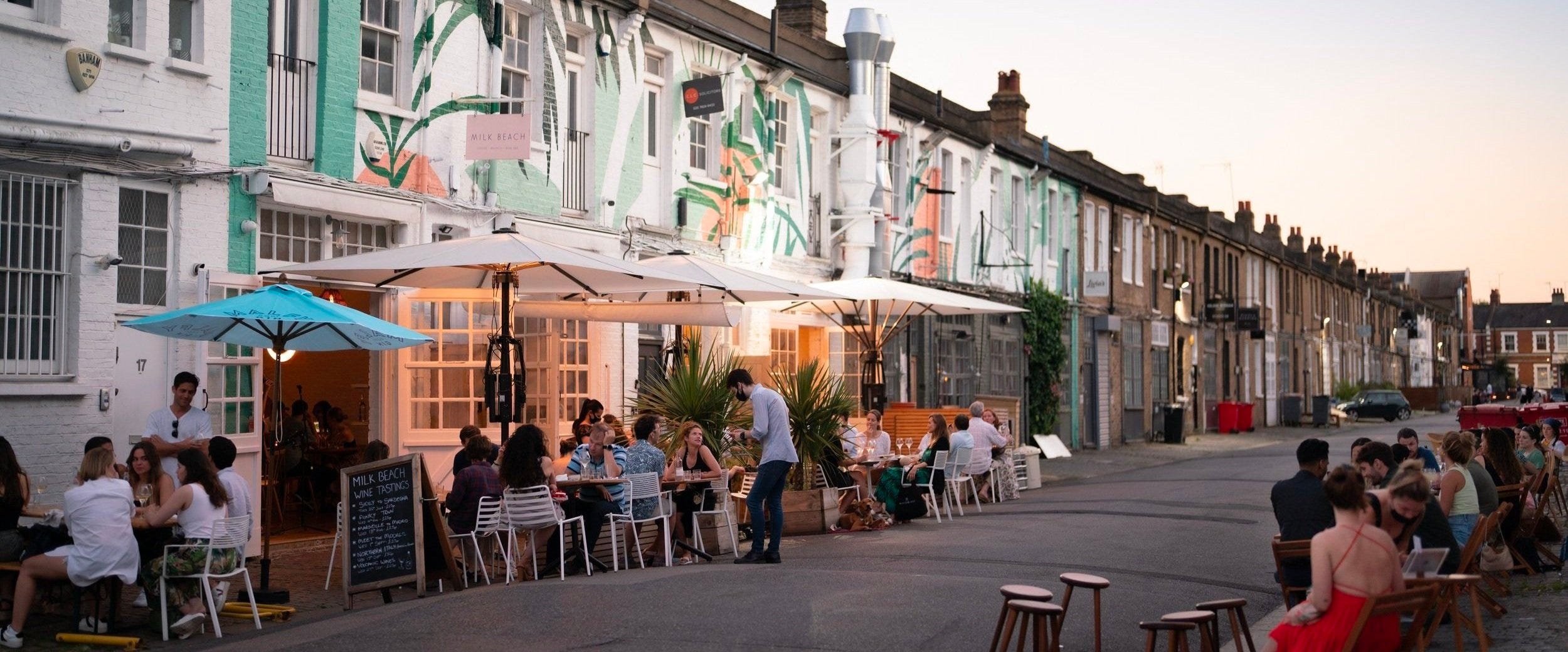
Mixed-use ground floors turn passive tenants into invested neighbours. When residents can grab a coffee, drop their child at nursery, or work from a coworking space without leaving the block, they stay longer and refer others.
When assessing a new site, ask: what ground-floor uses can serve the people who will live above and the wider neighbourhood? Local retail, a nursery, or a flexible coworking space are all worth testing in your feasibility.
A building that serves the street creates community. Community creates demand. Demand protects your exit.
Strategy 2: Bike storage that’s celebrated — not hidden — changes how people move
End-of-trip facilities are now required by building codes and sustainability standards in most markets. But compliance and quality are not the same thing.
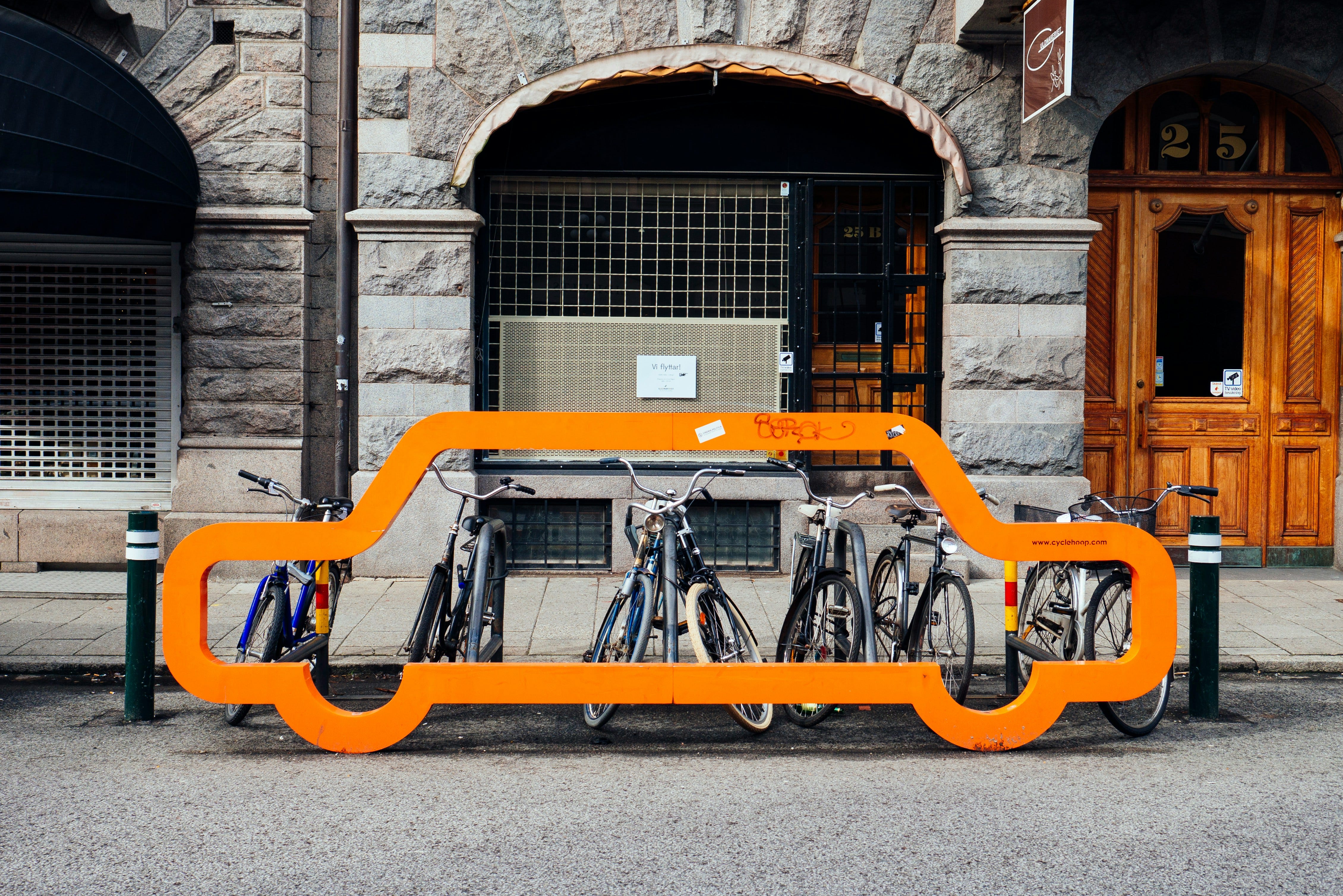
Most developers tick the box: a dark basement room with wall hooks and a drain. The result is a facility no one uses. When you design bike storage as a feature — good lighting, easy street access, logical circulation — you change behaviour. People actually cycle.
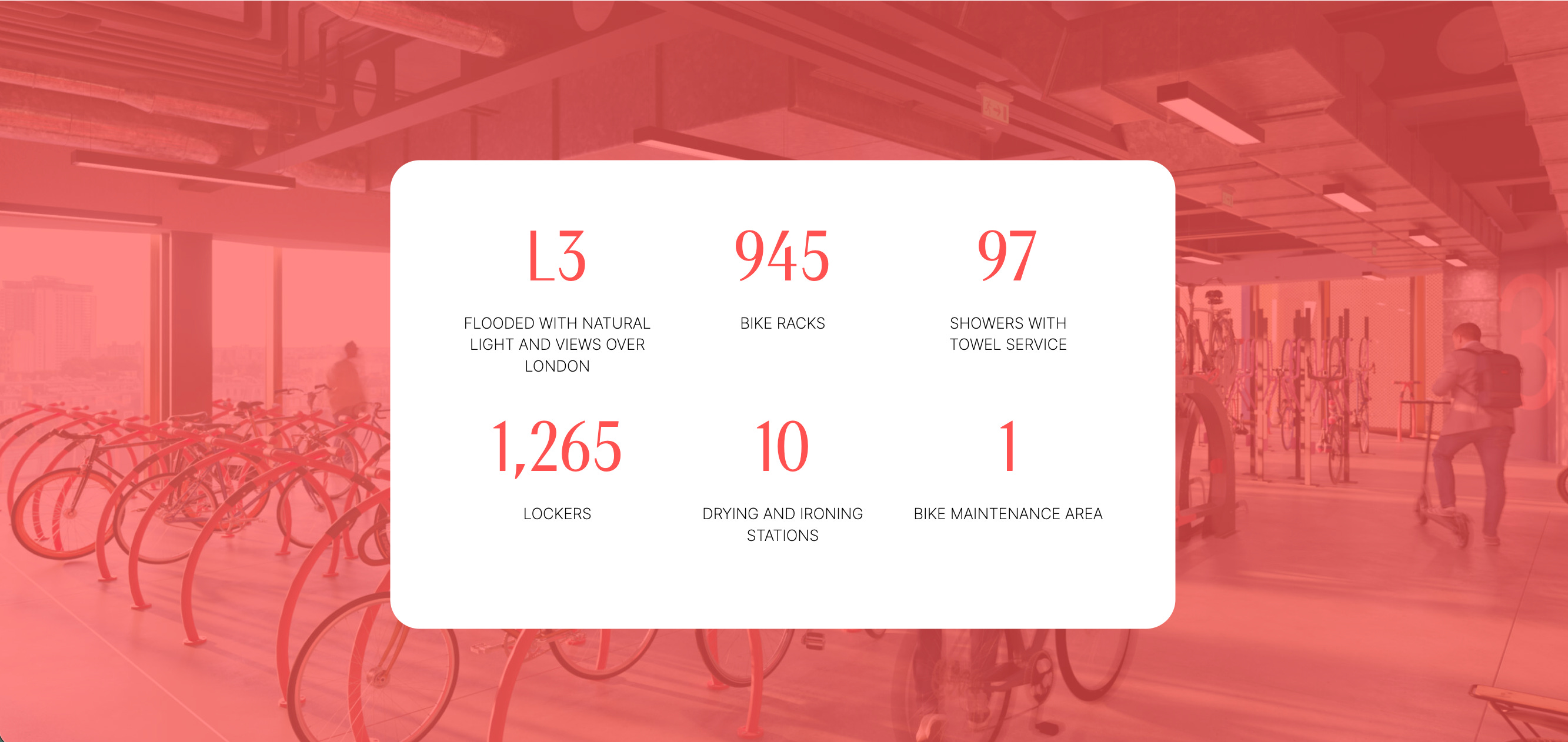
The bike park at 22 Bishopsgate in London is worth studying. It’s on the lower ground floor, accessed directly from the street, with clear wayfinding from the lifts. Showers and changing rooms are clean and properly maintained. The facility is consistently at capacity.
When specifying end-of-trip facilities, think about: street access, circulation from within the building, how a resident gets from flat to bike without friction, and changing room layout efficiency.
In Olympia Central at Kensington Olympia we pushed for a more efficient bike storage and at the same time improved the stacking of the building by locating the space in a deep floorplate that was going to be difficult to lease. The bikes are now located closer to the main lobby entrance making the journey from cycle to office much easier for people.
Strategy 3: Reclaiming space from cars is the fastest way to improve liveability
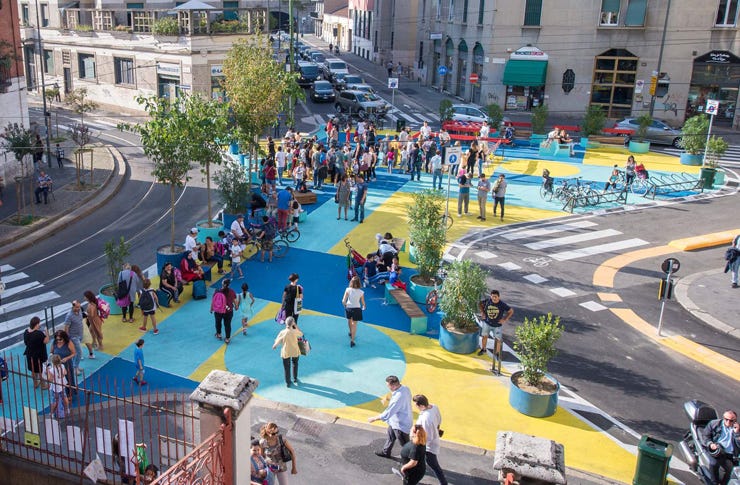
Post-pandemic, cities have started returning streets to people. Space previously given to car lanes and parking is becoming pocket parks, cycle paths, and outdoor seating. The real estate around those spaces is more in demand.
Milan’s Strade Aperte programme converted over 35km of streets for pedestrian and cyclist priority. Stockholm’s one-minute city concept takes the 15-minute model further. Paris has planted thousands of trees in underused urban space. In each case, the surrounding residential and commercial assets have benefited.
A developer who designs with public space — not against it — captures this shift. A courtyard opened to the street, a setback planted with trees, a cycle route that connects your building to the wider city network: these are details that show up in valuations.
Stop treating green space as a cost. It’s a demand driver.
Strategy 4: Friction is the enemy — smart buildings remove it before tenants notice
A 15-minute neighbourhood only works if the day-to-day experience is smooth. Getting from A to B, accessing a service, receiving a delivery — every point of friction erodes the quality of life your building promises.
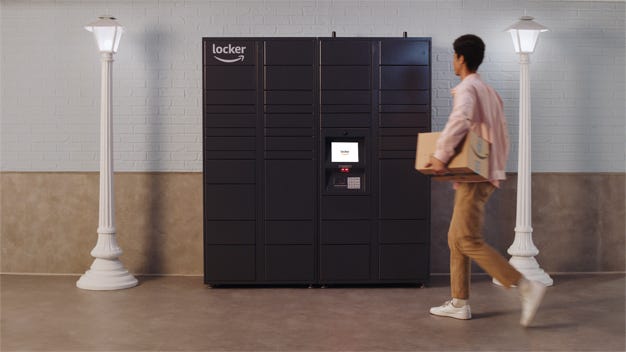
Smart building infrastructure removes that friction before tenants notice it. Parcel lockers allow courier access around the clock without requiring the resident to be home. Digital access systems eliminate lost key fobs. Building apps consolidate bookings, deliveries, and maintenance requests in one place.
A building without this infrastructure in 2026 already feels dated to the tenant who moved from one that had it. In five years, it will be a liability at lease renewal. Partnering with services like Amazon Hub for parcel lockers is a low-cost, high-impact starting point — build the space for it now, even if you don’t fit it out on day one.
In Summary
Frictionless neighbourhoods don’t happen by accident. They are the result of deliberate decisions made early in design and feasibility.
The four strategies above are not expensive gestures. They are practical moves that improve daily life for the people in your buildings — and show up in occupancy, rents, and exit values.
Activate the ground floor for the community, not just the building.
Design end-of-trip facilities as a feature, not a compliance box.
Embrace public space as a value driver.
Build out smart infrastructure before tenants expect it.
That’s all for today.
See you next week.
— Carlo
Founder and Managing Director Benigni
Sanity Check Your Project
Before you commit another million to your development, stress-test it with someone who’s delivered 2M sqm and €11B+ GDV across Europe.
Here’s what I can pressure-test for you:
Is your market thesis still valid? Office, hospitality and residential markets are shifting fast. What worked 18 months ago might not work today.
Will your budget survive the current cost environment? Construction costs and programme risk need a reality check before you commit.
Does your ESG strategy attract or repel capital? Tenants and investors have moved past good intentions. They want metrics.
What risks are you not pricing in? Regulatory shifts, planning delays, cost inflation. The ones that kill projects are the ones you didn’t model.
Book a free 15-minute strategy call. One conversation. No commitment. Just clarity on your next move.
Refer a Colleague
PS…If you’re enjoying this newsletter, please consider referring this edition to a friend or a colleague. Sharing valuable insights helps everyone make better investment decisions.
This post is sponsored by Benigni a specialist development manager working with international investors to realise long-term value through optimised development strategies. To learn more click this link to our website.

Subscribe to the Newsletter
A newsletter by Carlo Benigni providing, in less than 4 minutes, exclusive advice, strategies, and resources to help unlock hidden real estate value.
Subscribe for free to receive new posts and support my work.