


Welcome to a new issue of the Unlocking Real Estate Value newsletter. Each week I will provide you with exclusive advice and professional insights to help you realise long-term value through real estate development.

Most developers treat floor plate design as an architectural decision. It is not. It is a commercial decision that determines how fast a building leases and at what rent.
A floor plate is the product you are selling. If you cannot score it against the metrics tenants actually compare, you are marketing blind.
The good news: a structured scoring approach lets you identify weaknesses early, fix what matters most and turn your floor plate into a leasing argument that justifies premium rents.
Here are three steps to get there.
Step 1: Score your floor plate against the 5 KPIs tenants actually compare
Before you brief architects on design changes, you need a baseline. Without one, you are guessing which improvements will move the needle.
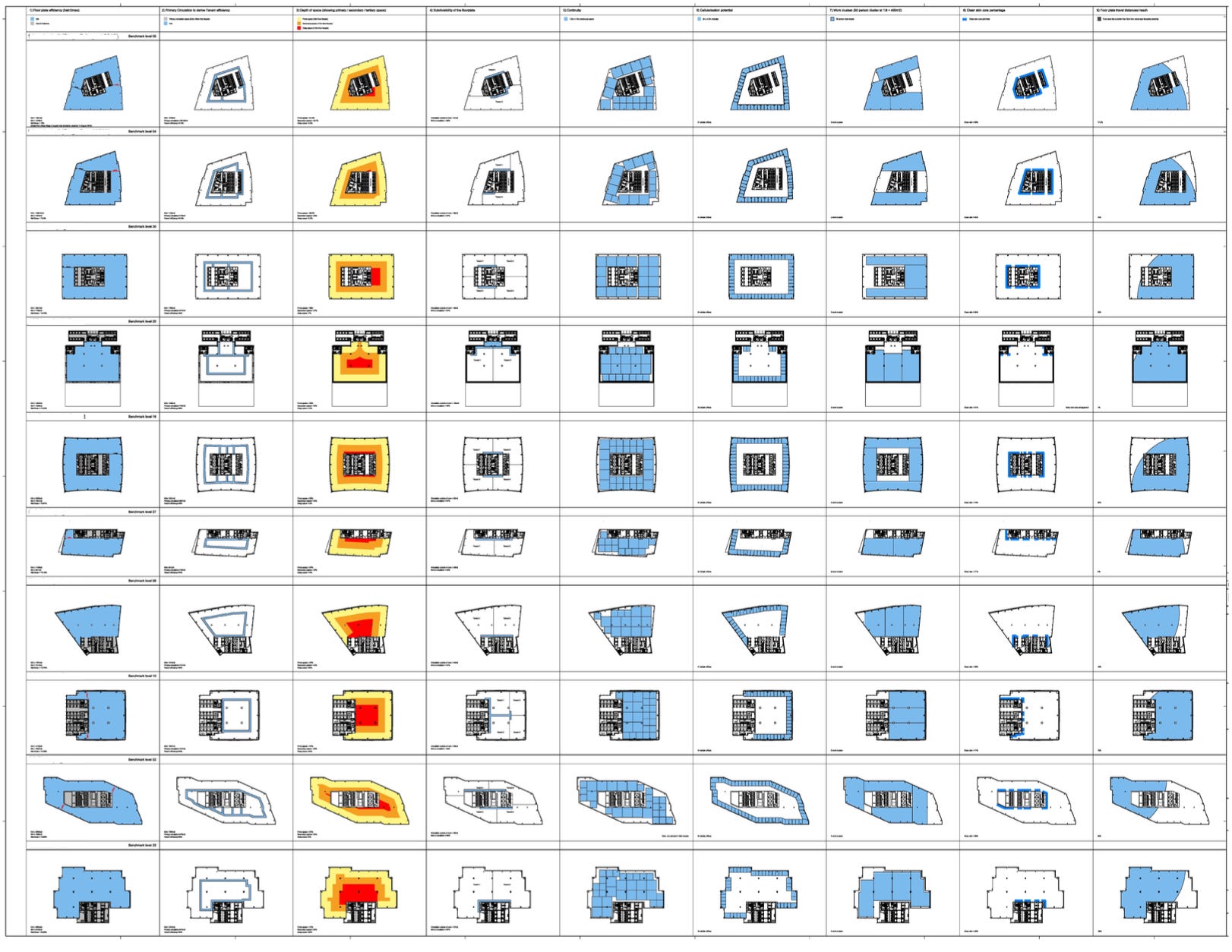
Five KPIs matter most to occupiers: Tenant Efficiency, Floor Plate Continuity, Regularity, Depth of Space and Sub-divisibility.
A high Tenant Efficiency ratio signals minimal wasted space. Strong Floor Plate Continuity means fewer obstructions blocking flexible layouts. Regularity supports straightforward furniture planning. Better Depth of Space improves natural light penetration. Sub-divisibility tells tenants how easily a floor can be partitioned to suit different team sizes or future growth.
Developers who skip this step discover problems during leasing, when fixing them is expensive or impossible. Developers who score early can brief their design team with precision, targeting the two or three metrics where the building underperforms its competitive set.
Compile your scores into a clear, visual overview. Share it with prospective tenants. Transparency builds trust and signals that design decisions were made with their needs in mind.
Step 2: Fix the three design elements that kill tenant efficiency
Once you have scores, focus your design budget on three elements that have the largest impact on how tenants experience the floor plate.
The Core. Minimise penetrations through the perimeter wall. Keep only essential access points: lift lobbies, washrooms, fire exits. A clean perimeter allows tenants to place meeting rooms right up against the core without wasted circulation.
The Structural Grid. Target a module based on a multiple of 1.5 metres. This ensures seamless integration with the building’s planning grid and avoids awkward leftover spaces that reduce usable area.
The Façade Layout. Align façade modules with the same 1.5-metre planning grid. When tenants can align partition walls with façade mullions, acoustic performance improves and fit-out costs drop.
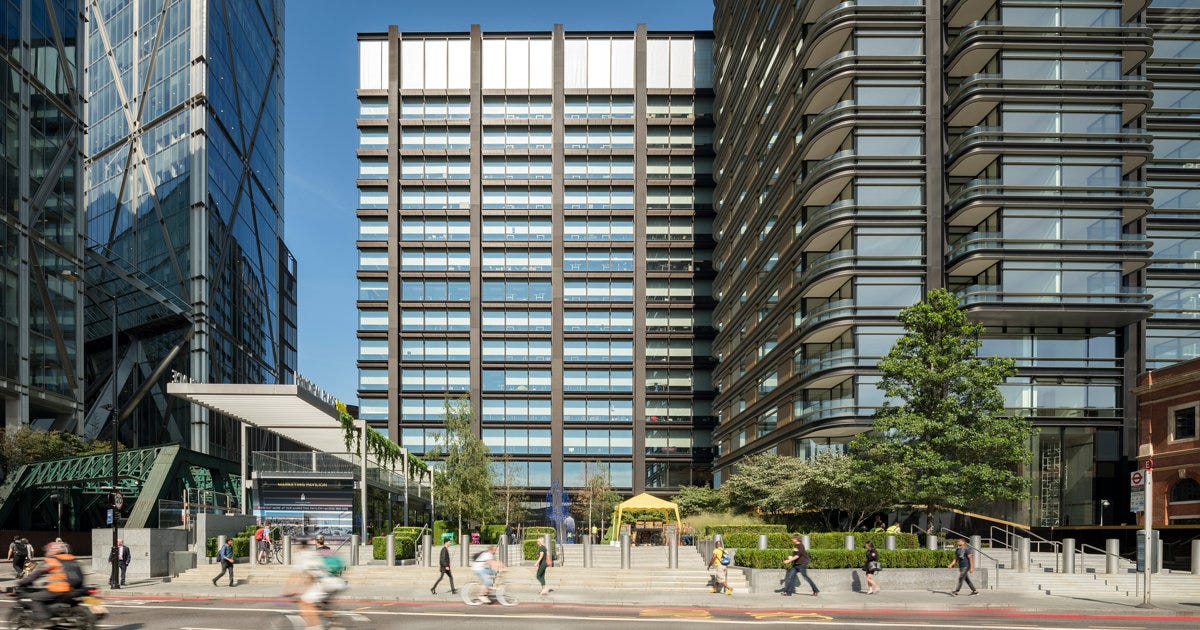
At Principal Place in London, Brookfield inherited a building that was struggling with leasing traction. The floor plate read as a traditional financial-sector product. We reconfigured the core, consolidated perimeter risers into a common riser, added a goods lift, and shrank the core footprint. Net-to-Gross efficiency improved from 82% to 85%. Combined with a façade update that gave the building a more industrial character, the repositioning shifted the target market from financial tenants to TMT occupiers.
The leasing campaign that followed was highly successful.
Step 3: Turn your scores into a leasing narrative that justifies premium rents
Floor plate scores are not just a design tool. They are a sales tool. The mistake most developers make is keeping this data internal. The developers who win use it to frame a story tenants can compare against competing buildings.
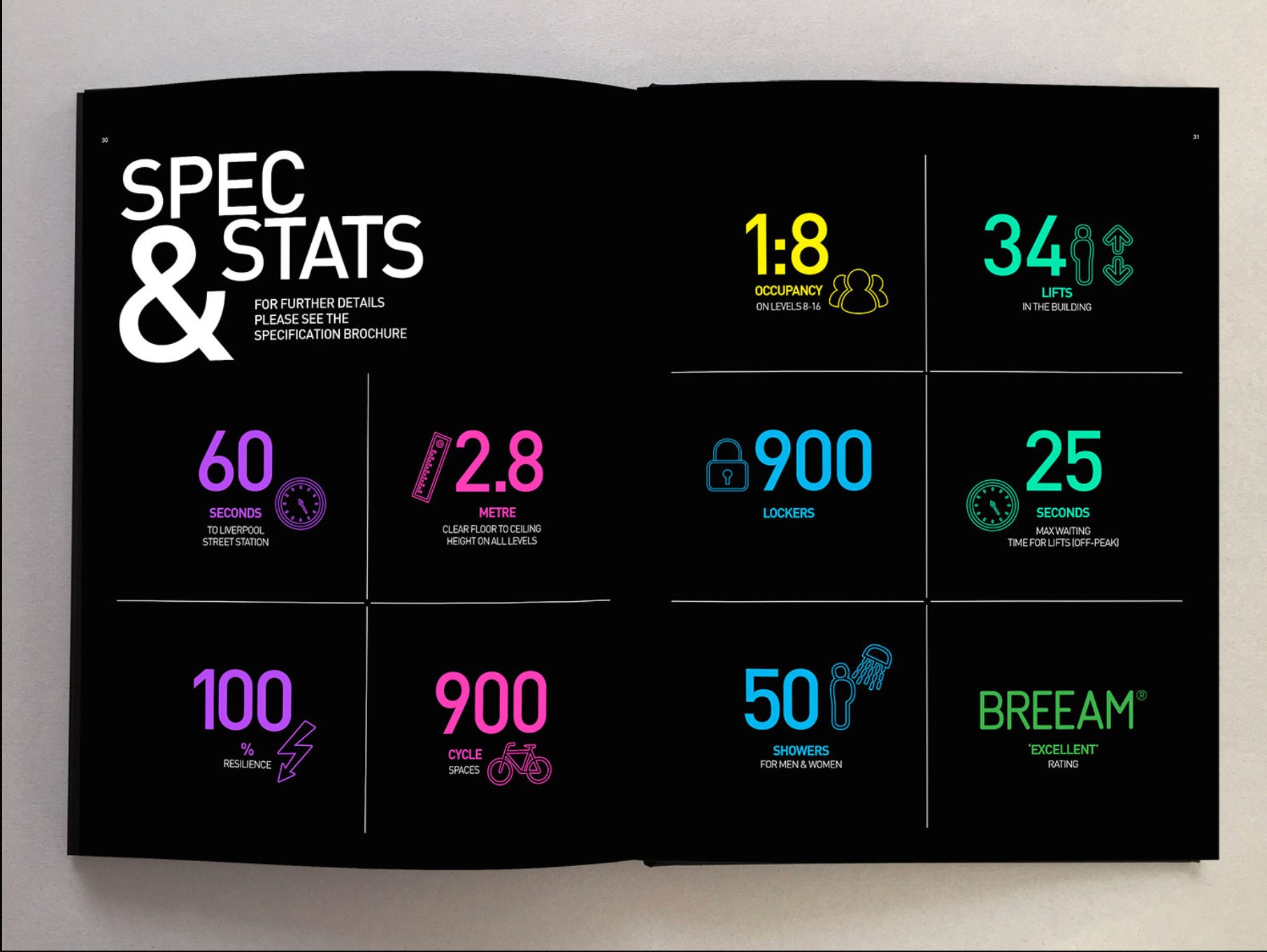
Start by leading with your strongest metrics: tenant efficiency, flexibility, daylight penetration. Use visual aids, infographics or simple diagrams, in your marketing materials so tenants can see the advantage without reading a technical report.
100 Bishopsgate in London is a strong example. The leasing team used floor plate analysis to demonstrate that the building offered the most efficient floor plates in the City of London. That data-driven narrative helped tenants see superior value despite higher rental rates. The result: 70% of the floor space was pre-leased within six months.
Without this kind of evidence, you are asking tenants to take your word for it. With it, you are giving them a reason to pay more.
Key Takeaways
Score your floor plate early against the 5 KPIs tenants compare: efficiency, continuity, regularity, depth, and sub-divisibility.
Focus design spend on the core, structural grid, and façade alignment, the three elements with the biggest impact on tenant experience.
Use your scores in marketing materials to build a data-driven leasing narrative that justifies premium rents.
That’s all for today.
See you next week.
— Carlo
Founder and Managing Director Benigni
One question before you go:
Have you ever scored your floor plate against tenant KPIs before briefing your leasing team?
Hit reply and tell me. I read every response.